

Vietnam Travel Trends: from Floating Markets to Mekong DeltaLiving Culture
The Mekong Delta living culture is a unique aspect that cannot be found anywhere else in Vietnam
Mekong Delta Living Culture
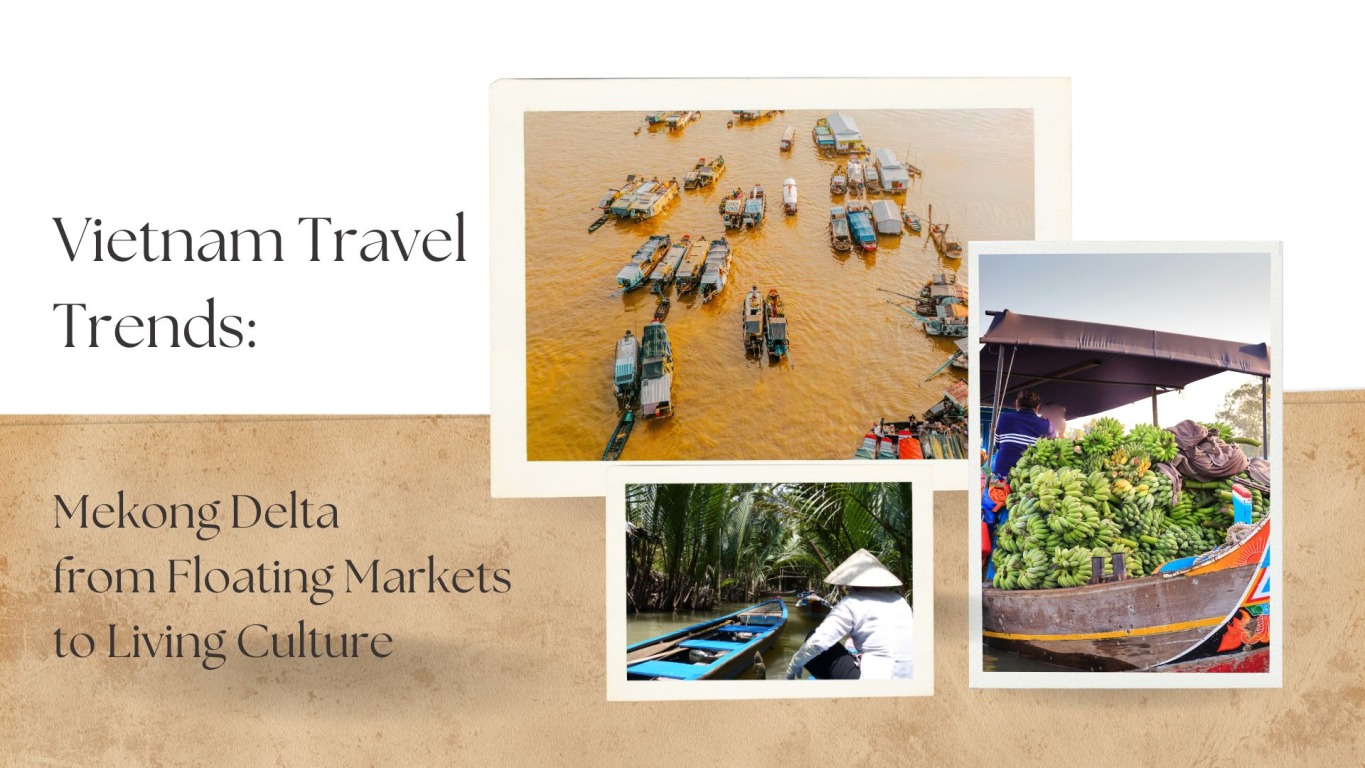
About a decade ago, the Mekong Delta had very limited road infrastructure, and most trade relied on small wooden boats. Families lived directly on the water, using their boats both as homes and as mobile shops, allowing them to move easily from canal to canal. This lifestyle shaped the region’s famous floating markets, such as Cai Rang and Phong Dien, where goods were traded entirely on the river.
However, times have changed. With the rapid development of highways, bridges, and even an international airport in Can Tho, river-based living is no longer the most practical option. Rising fuel costs have also made it increasingly expensive for families to maintain a business on the water. As a result, many residents have gradually moved onto the land, shifting their livelihoods to towns and roadside markets.
Today, Mekong floating markets have become much smaller, serving mainly as early-morning hubs where a few traders transport fruit and produce from their orchards to sellers on the shore. Only a very small number of boats remain to cater partly to tourism, offering a glimpse of a river culture that once flourished across the delta.
The Mekong Delta living culture is a fascinating blend of water-based traditions, agrarian livelihoods, and deep-rooted communal values. For centuries, people here have adapted to the river’s rhythm, building floating homes, markets, and transportation systems that remain essential even today. Visitors often feel that every corner of the delta tells a story — from the sound of wooden boats paddling through narrow canals to the scent of fresh tropical fruits carried by vendors at dawn.
Ultimately, what makes the Mekong Delta living culture so captivating is its warm hospitality and simplicity. Local people welcome visitors with genuine smiles, home-cooked meals, and stories about their river-centered lives. Whether you’re tasting freshly caught fish, cycling through peaceful villages, or drifting along palm-shaded canals, the region offers a sense of serenity and authenticity that is hard to find elsewhere. Understanding the culture here means appreciating how people live in harmony with nature, maintain strong family traditions, and preserve unique customs that have shaped this remarkable part of Vietnam for generations.
Nowadays, a new generation of Mekong experiences highlights the depth of local life and the region’s cultural heritage. Travellers are encouraged to slow down, stay longer, and discover the delta beyond its iconic boats. Mekong Delta living culture tours now focus on:
-
Staying in riverside eco-lodges or family-run homestays
-
Cycling through peaceful villages and lush fruit gardens
-
Visiting coconut workshops and traditional craft communities
-
Cooking with local families and learning Southern Vietnamese recipes
-
Understanding daily life shaped by the river
-
Participating in small, community-based cultural activities
- Although the floating markets have become smaller over the years, they still retain their own unique charm. It’s a chance for travellers to step back in time and appreciate a living fragment of the Mekong’s heritage.
This new direction is particularly attractive to cultural travellers, families, retired couples, and educational groups. A minimum of two days is now recommended to experience the region authentically.
To discover the rest of the Vietnam Travel Trends 2026, take a look at our complete guide: “Vietnam Travel Trends 2026: 12 Key Insights – An Insight Report for International Tour Operators & Travel Designers”
click here
If you are an agency seeking a trusted B2B tour operator in Vietnam, ALO Travel Asia is your perfect partner. Read more about us
For more reviews about us: reach our Tripadvisor