


Vietnam Travel Trends: Vietnam as a Long-Stay and Digital Nomad Hub
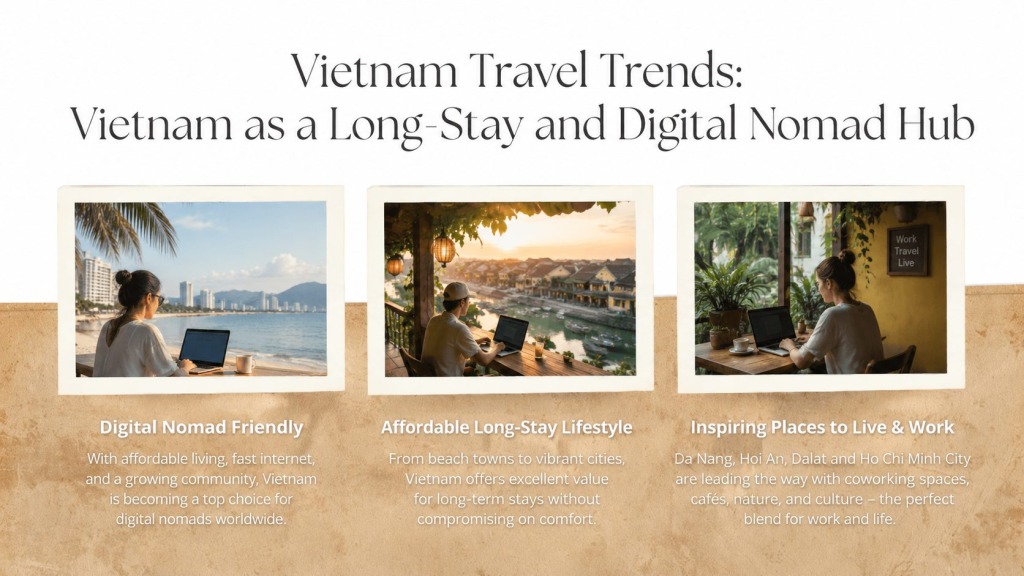 Vietnam Travel Trends – Long stay travel
For much of the past two decades, Vietnam has been recognised as one of Asia’s most rewarding destinations for cultural discovery. Travelers came for its dramatic landscapes, vibrant cities, world-renowned cuisine, and rich history, typically experiencing the country through carefully planned itineraries lasting between ten and twenty days.
Today, however, a quieter transformation is taking place.
Across the world, the relationship between work, travel, and lifestyle is changing. Remote employment, entrepreneurship, freelance careers, and flexible working arrangements have given millions of professionals the freedom to choose where they live—not just where they take their holidays.
As a result, an entirely new category of traveller has emerged.
Rather than simply searching for their next vacation, these travellers are looking for destinations where they can comfortably spend one, two, or even three months while continuing their professional lives. They seek places that offer affordability, reliable infrastructure, cultural richness, personal wellbeing, and opportunities to become part of everyday local life.
Increasingly, Vietnam is becoming one of those destinations.
What was once primarily viewed as a holiday destination is gradually evolving into a lifestyle destination—welcoming remote workers, entrepreneurs, writers, designers, photographers, consultants, retirees, and creative professionals who choose to stay longer, travel more slowly, and experience the country in far greater depth than traditional visitors.
For international tour operators and destination management companies, this represents more than a passing trend. It signals an important shift in traveller behaviour that opens new opportunities for designing experiences extending well beyond conventional sightseeing.
The Rise of Long-Stay Travel
The growth of long-stay travel is not unique to Vietnam. It reflects a broader global movement that accelerated following the COVID-19 pandemic. Many people began reassessing how they wished to work and live. Flexible schedules became increasingly common, while remote collaboration allowed professionals to remain productive from almost anywhere with a reliable internet connection.
At the same time, travellers began placing greater value on slower, more meaningful experiences. Instead of trying to visit six cities in two weeks, many now prefer spending several weeks in a single destination. Rather than rushing through famous landmarks, they seek neighbourhood cafés, local markets, community events, language exchanges, cooking classes, wellness programmes, and authentic cultural encounters.
Travel is becoming less about consuming destinations and more about experiencing everyday life. Vietnam’s combination of affordability, safety, hospitality, cultural diversity, and improving infrastructure positions the country exceptionally well within this global movement.
Why Vietnam Is Emerging as a Long-Stay Destination?
Vietnam’s growing popularity among long-stay travellers is not driven by a single factor. Instead, it results from the combination of several advantages that increasingly align with evolving traveller expectations.
1. Affordable Quality of Life
Affordability remains one of Vietnam’s strongest competitive advantages. Compared with many established digital nomad destinations, Vietnam offers an exceptional balance between quality of life and living costs. Comfortable serviced apartments, excellent local restaurants, convenient transport, healthcare services, and modern amenities remain highly accessible.
Depending on lifestyle and destination, many long-stay visitors comfortably live on approximately USD 700–950 per month, while modern one-bedroom apartments or serviced studios commonly range from USD 200–500 per month.
For remote professionals earning international incomes, this affordability allows them to extend their stay while maintaining a comfortable lifestyle.
2. Reliable Digital Infrastructure
A successful long-stay destination requires more than beautiful scenery.
Reliable internet connectivity has become just as important as comfortable accommodation. Vietnam has invested significantly in digital infrastructure over the past decade. High-speed fibre internet is widely available throughout major cities, mobile data is both affordable and reliable, and cafés have naturally evolved into productive workspaces equipped with stable Wi-Fi and welcoming atmospheres.
Alongside these informal work environments, dedicated coworking spaces continue to expand in cities such as Da Nang, Ho Chi Minh City, Hanoi, and Hoi An, supporting a growing international remote-working community.
3.Flexible Entry Through the 90-Day E-Visa
Although Vietnam does not currently offer a dedicated Digital Nomad Visa, recent visa reforms have significantly improved accessibility for international visitors.
The introduction of the 90-day multiple-entry e-visa has made extended stays considerably more practical, allowing travellers to spend several months exploring different regions while maintaining flexibility throughout their journey. Rather than remaining in one location, many long-stay visitors gradually move between northern, central, and southern Vietnam, creating a natural demand for multi-destination experiences.
The Cities Leading Vietnam’s Long-Stay Movement & Digital Nomad Hub
While long-stay travel can be found throughout the country, several destinations have naturally emerged as leaders due to their lifestyle offerings, infrastructure, and international communities.
- Da Nang – Vietnam’s Emerging Digital Nomad Capital
No destination better represents Vietnam’s transformation than Da Nang.
Over recent years, the coastal city has gained increasing international recognition as one of Southeast Asia’s fastest-growing digital nomad destinations. National tourism authorities and major media outlets have highlighted Da Nang’s unique combination of modern infrastructure, pristine beaches, mountain landscapes, reliable internet, and growing coworking ecosystem.
Unlike larger metropolitan centres, Da Nang offers a balanced lifestyle. Professionals can begin the morning working from a beachfront café, spend the afternoon surfing or hiking on Son Tra Peninsula, and enjoy evenings in a relaxed international dining scene. Its proximity to UNESCO World Heritage destinations such as Hoi An and Hue further enhances its appeal for longer stays. For many remote professionals, Da Nang represents an ideal balance between productivity and wellbeing.
- Ho Chi Minh City – Vietnam’s Entrepreneurial Centre
For travellers seeking professional networking, business opportunities, and urban energy, Ho Chi Minh City remains Vietnam’s economic powerhouse.
Its rapidly expanding startup ecosystem, international business community, extensive café culture, and diverse coworking spaces make it particularly attractive to entrepreneurs, consultants, and freelancers. The city’s dynamic atmosphere appeals to those who thrive in fast-moving environments while still enjoying Vietnam’s comparatively affordable living costs.
- Hanoi – A City of Culture and Creativity
Vietnam’s capital offers a distinctly different experience. Rather than attracting visitors through beaches or nightlife, Hanoi appeals through its heritage, intellectual atmosphere, and creative energy. Historic architecture, independent cafés, museums, galleries, traditional craft villages, and a vibrant artistic community have made the city increasingly popular among writers, designers, photographers, researchers, and culture-focused travellers.
Its excellent access to destinations such as Ninh Binh, Ha Long Bay, Sapa, Ha Giang, and Ba Be Lake also makes Hanoi an ideal base for exploring northern Vietnam over an extended period.
- Hoi An – Slow Living at Its Finest
Only thirty minutes from Da Nang, Hoi An has quietly become one of Vietnam’s most attractive long-stay destinations. The UNESCO World Heritage town offers an entirely different rhythm of life.
Morning walks through rice fields, afternoons in riverside cafés, evening lantern-lit streets, nearby beaches, yoga studios, artisan workshops, and boutique coworking spaces create an environment where productivity naturally blends with relaxation. Many visitors initially arrive for only a few days before deciding to extend their stay for several weeks.
- Da Lat – Creativity in the Highlands
Another destination steadily gaining attention is Da Lat.
Its cool mountain climate, pine forests, coffee culture, slower pace of life, and growing café scene have made it increasingly attractive for creatives seeking a quieter environment. Often described as Vietnam’s most liveable mountain city, Da Lat provides an inspiring setting for focused work while offering easy access to nature and outdoor activities.
- Beyond Sightseeing: Living Like a Local
Perhaps the greatest difference between traditional tourists and today’s long-stay travellers lies in what they hope to gain from their journey. Rather than simply seeing Vietnam, they wish to experience daily life within it.
This has created growing demand for experiences that foster genuine cultural connection, including:
- Vietnamese cooking classes
- Language lessons
- Coffee appreciation workshops
- Artisan and handicraft experiences
- Wellness retreats
- Yoga and meditation programmes
- Community-based tourism
- Local volunteering opportunities
- Cultural festivals and neighbourhood events
- Countryside cycling and farming experiences
Instead of moving quickly from attraction to attraction, long-stay visitors seek routines that help them feel temporarily at home.
Opportunities for Tour Operators and DMCs
The rise of long-stay travel represents an important opportunity for the tourism industry. Traditional itineraries designed around rapid sightseeing may not fully meet the expectations of this emerging market.
Instead, travel companies can create greater value by offering flexible programmes that combine accommodation, lifestyle experiences, cultural immersion, and opportunities for meaningful local interaction.
Potential products include:
- Four to eight-week customised itineraries
- Flexible accommodation packages
- Boutique apartments and serviced residences
- Culinary and coffee immersion programmes
- Vietnamese language introductions
- Artisan workshops
- Wellness-focused journeys
- Community engagement experiences
- Slow travel itineraries combining work and leisure
These visitors also tend to generate greater long-term value. Because they develop stronger emotional connections with destinations, they are more likely to return, recommend Vietnam to friends, and explore different regions on future visits. For destination management companies, long-stay travellers represent not simply higher spending per visit, but stronger lifetime visitor value.
Vietnam’s emergence as a long-stay and digital nomad destination reflects a broader transformation in global travel. Increasingly, visitors are looking beyond traditional holidays in search of places where they can combine work, exploration, learning, and everyday life. With its affordability, cultural richness, improving infrastructure, and welcoming communities, Vietnam is well positioned to become one of Southeast Asia’s leading destinations for this growing market.
At ALO Travel Asia, we continuously monitor evolving Vietnam travel trends to help our international partners develop travel experiences that reflect changing traveller expectations. From customised long-stay itineraries and lifestyle experiences to cultural immersion and flexible travel planning, we work closely with tour operators and travel designers to create journeys that are both commercially successful and genuinely meaningful.
We hope these insights into Vietnam’s long-stay travel trend help our partners identify new opportunities as traveller behaviour continues to evolve.
Understanding Vietnam Travel Trends 2026 is essential for travel agencies seeking to design experiences that resonate with today’s travellers. The rise of remote work, digital nomad lifestyles, and extended stays demonstrates that Vietnam is no longer viewed solely as a holiday destination, but increasingly as a place where visitors choose to spend meaningful time. By responding to these changing preferences, travel companies can create more relevant, differentiated, and future-ready Vietnam travel products.
To discover the rest of the Vietnam Travel Trends 2026, take a look at our full guide: “Vietnam Travel Trends 2026: 12 Key Insights – An Insight Report for International Tour Operators & Travel Designers”
click here
If you are an agency seeking a trusted B2B tour operator in Vietnam, ALO Travel Asia is your perfect partner. Read more about us
For more reviews about us: reach our Tripadvisor